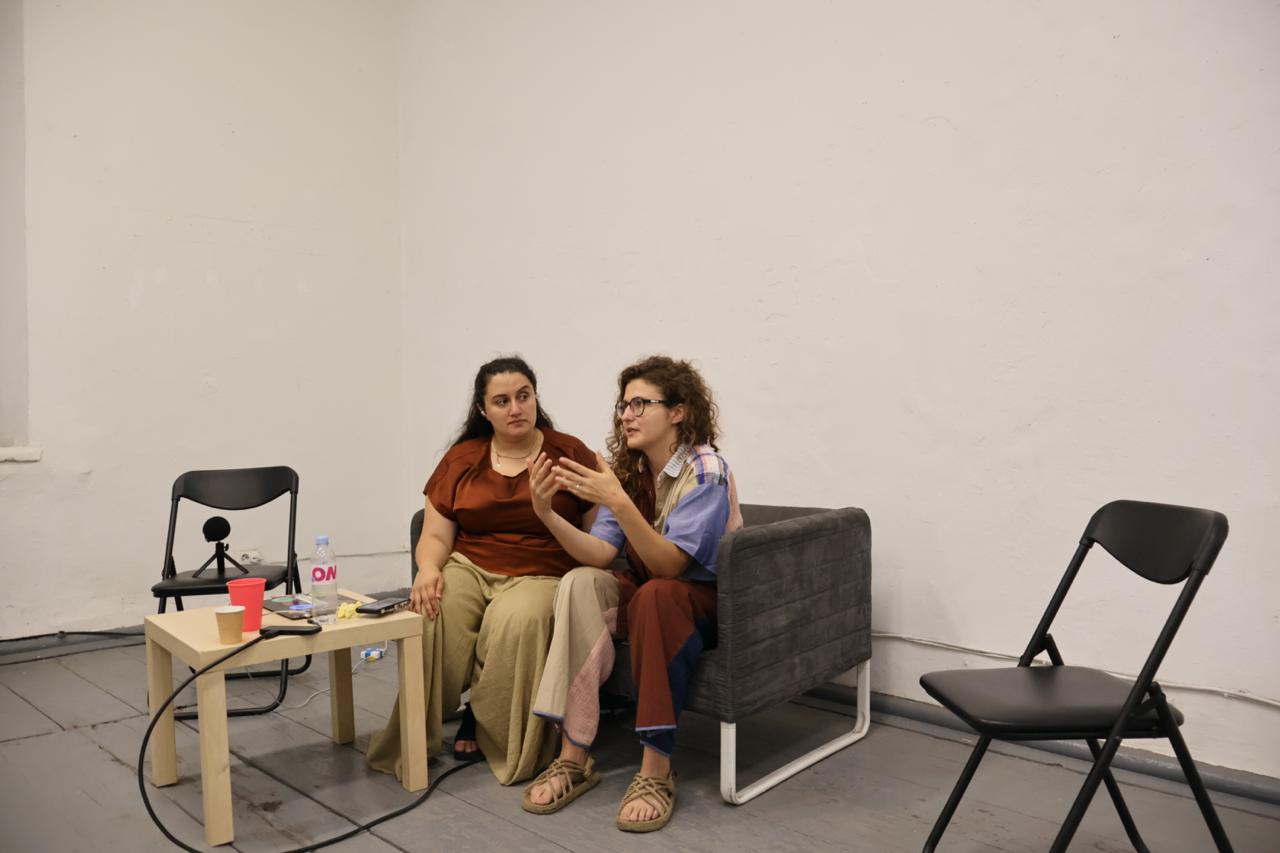
For the first of three discussions in the series Common Ground, Shoghakat Mlké-Galstyan and Anna Provozin introduced us to their practice and spoke about their approaches to art in the context of war.
Art as an instrument of healing and holding space together: experience of working with vulnerable youth and Ukrainian refugee teenagers in Moldova
What role does art play in the life of displaced Ukrainian youth, how can it be a funky tool for creating a change and how can it create common spaces for girls where their voices are heard? Anna shared several examples of projects from Ukraine and Moldova in which she was involved, showing how art helps create safe spaces for vulnerable youth and provides them with a platform to express themselves.
She also spoke of a “yes-and” approach, going along with children and young people to create whichever games and objects they wanted to play without stopping them. The structures they created – for example halabuda (a type of self-made hut, or pillow-fort) need to stay untouched by staff assuring that the boundaries that young people set are respected..
stability and routine are especially important to displaced young people, who find themselves in a situation that is unpredictable. This need for stability extends in all aspects of art workshops, even down to the materials. ” You can’t use watercolour, oils and pastels, because the results will be unexpected “, said Provozin. Instead, she uses acrylic paints or markers, where the results are predictable.
In her work with young people, she noticed that there were several approaches that people had, but which didn’t work: denying the sadness and insecurity that young people fell rather than acknowledging it and validatating these feelings. Progress and eventual building of trust.
That’s how empires are destroyed – it has to be from the bottom up”, said Provozin
Art as a space for dialogue and healing: reflections from Armenia’s post-war reality
Starting from the question of what role art can embody in a war and post-war situation, Shoghakat spoke about memory preservation, artistic response, and how art can serve as a space for mediation and reflection, especially in times of wars. The presentation includes various perspectives from contemporary artists in Armenia, and focuses on how their work engages with displacement, absence, and collective healing.
Shoghakat Mlké-Galstyan showed many examples of Armenian art that engaged with war. In public space, the murals of deceased soldiers. Memory, trauma that affects multiple generations – especially in the context of the Armenian genocide – the feeling that this trauma could be repeated rises up. Question of what to preserve in public space – the damages inflicted by war as a memorial and to not make things beautiful – “We should never take peace for granted, no matter how long it lasts” spoke about her work in the context of the Living Room Yerevan: not naming ‘peace’ directly because of people’s adverse reaction to it. Rather, they try to address and find out which conditions are necessary for the creation of peace, and what participants in their events and workshop need to create their own feeling of safety.
Peace is associated with being weak, especially in a situation of ongoing or very recent war, and the mention of the word results in a blocking off of conversation. Gendered dynamics – heroic narratives and expectations placed on boys and how to avoid becoming a society where men haven’t had the space to address their traumas and emotions.
“we should heal their traumas too, or we end up with very mature women who are dealing with the problems of men who haven’t dealt with their emotions”
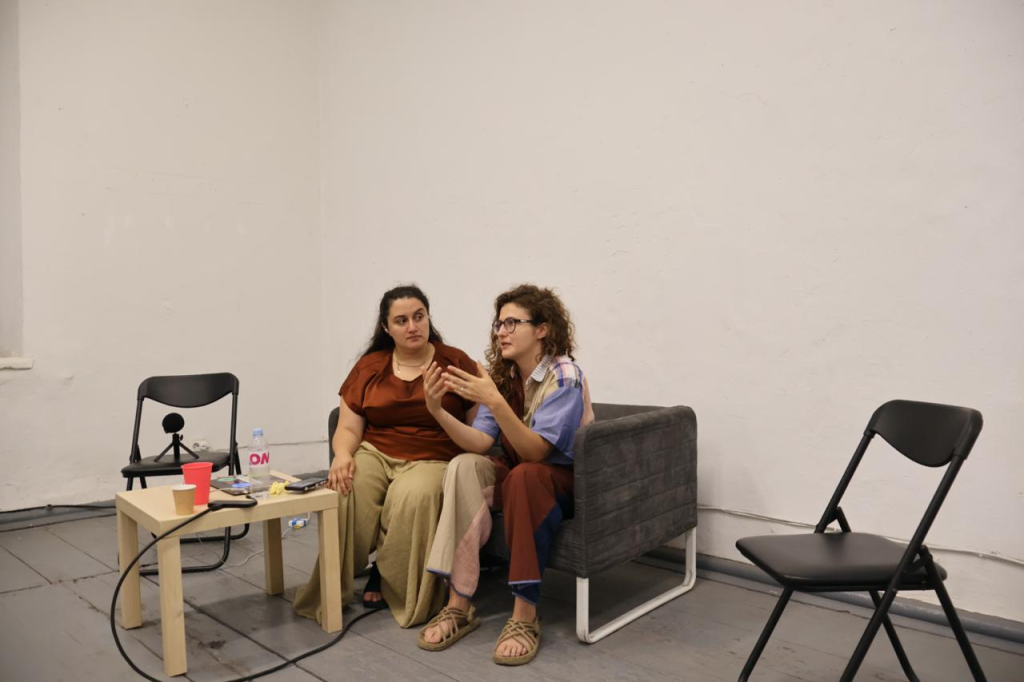
Shoghakat Mlke-Galstyan [AM] – Yerevan-based choreographer, performer, and cultural manager whose work bridges contemporary performing arts, research, and social engagement. She is the founder and soloist of MIHR Theatre, manager of Tiezerk Band, and lecturer at the Yerevan State Institute of Theatre and Cinematography.
Anna Provozin [MD] – artist based in Moldova, originally from Lviv, Ukraine. Anna works with teenagers from vulnerable groups at the non-formal education center “Diversity”, using artistic methods to foster social change.
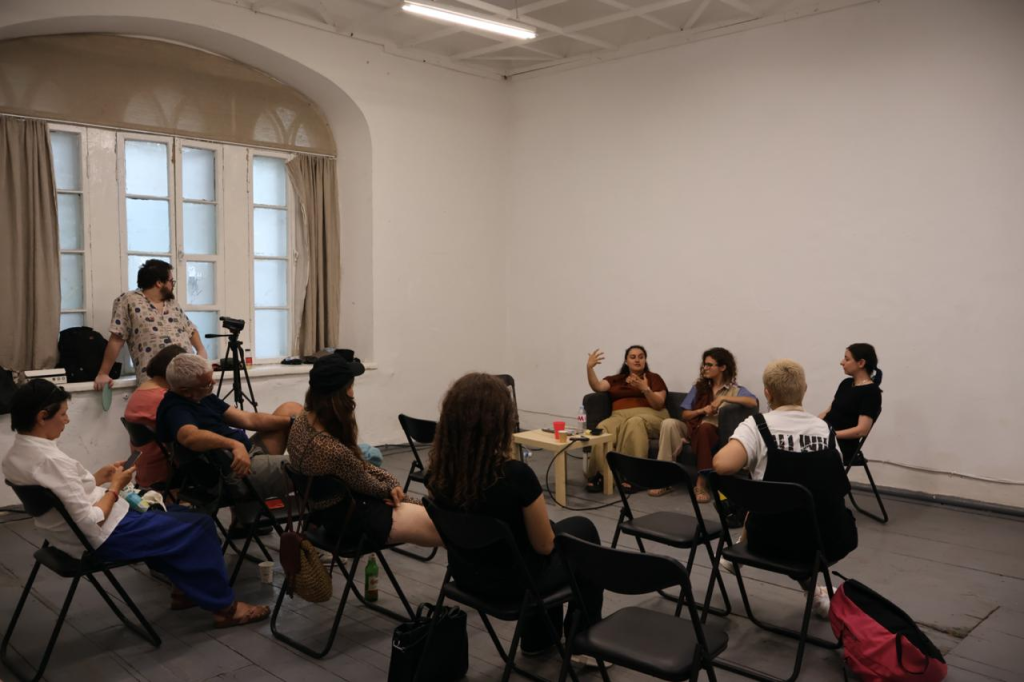
The event series Common Ground is part of the theme Culture wars in times of polarization – a cycle of conferences and meetings held in Chisinau throughout 2023-2025, in the framework of the research project Contemporary art, popular culture, and peacebuilding in Eastern Europe.
Presentations and discussions with the participation of facilitators and local guests focus on expanding the understanding of their artistic practice and how it relates to the theme of conflicts in their countries of origin (Armenia, Moldova, Serbia and Ukraine). In this section of the program, guests will talk about the role of artists and cultural workers in preventing, lessening, mitigating and working with the consequences of conflicts in society.