We’re delighted that you’re interested in the ZHdK’s teaching workshops. On the following pages, you’ll find the most important information about using the workshops.
You’ll be granted access to a workshop once you’ve successfully completed a Z-Tech course. Before you attend your first Z-Tech course, you must have completed this e-learning module and answered the final test questions correctly.
Accident insurance is compulsory for using the workshops.
Workshops
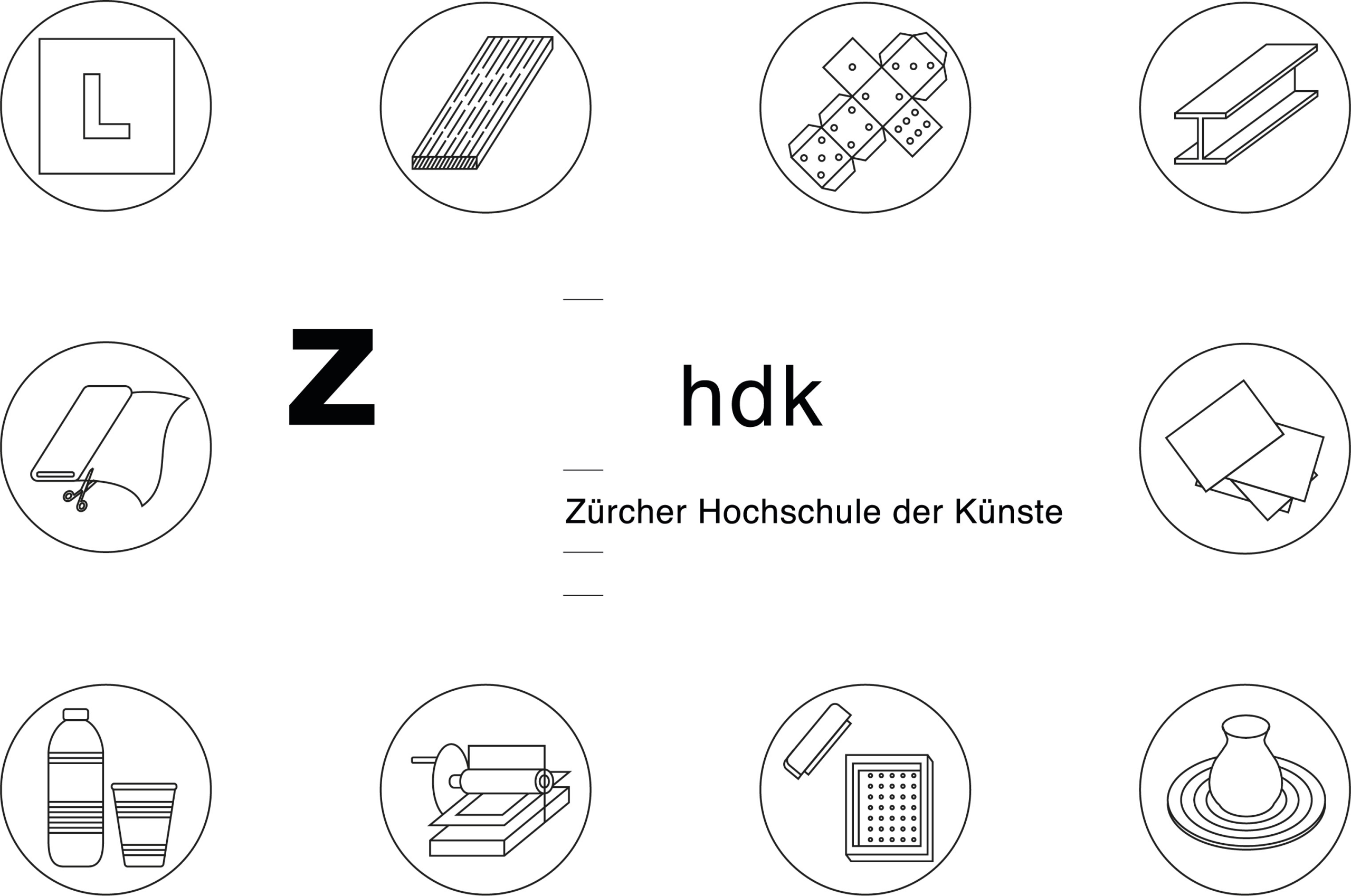
In the workshops, students learn to apply various methods, materials, and machines and use them to realize their design ideas. They can practically experience the entire process, from an artistic concept to a finished example or object. From idea to conception to concretization, they progressively expand their procedural knowledge and production skills.
LowLevel Workshop
The LowLevel Workshop (3.E07) offers quick access to machinery and tools, thereby significantly expanding the possibilities available in your own studio. In addition to polystyrene cutters and basic cutting machines, the LowLevel Workshop also provides an introduction to digital techniques such as laser cutting.
Woodworking workshop
The wide range of woodworking machines in the wood workshop (2.E02 / 2.E03) enables a variety of manufacturing processes: from panels to furniture, from block boards to solid wood boards glued together by hand, using a lathe to create rounded shapes, or using bending techniques to produce moulded pieces. Or, using traditional hand tools, you can transform a blank into your own sculpture. The workshop supervisors are on hand to assist with the various working techniques.
Metal workshop
In the metal workshop (2.D01), large and small assemblies and structures can be produced using a variety of metals. A wide range of machines are available to assist with cutting, shaping and assembly, and the laser can be used to mass-produce parts from aluminium or steel, amongst other materials. In close collaboration with the precision metal workshop, metal moulds can also be cast.
Ceramics workshop
Whether through hand-building, free-thrown throwing on the potter’s wheel, casting in self-made plaster molds, or 3D printing – the ceramics workshop (2.E23) offers a diverse range of possibilities for creating objects from clay, which can be further processed and glazed after firing. Experimenting with clay, casting slips, engobes, and glazes results in prototypes, models, sculptures, functional ceramics, and installation pieces. New and alternative ceramic ideas and their realization are always welcome.
Plastics workshop
In the plastics workshop (2.E06), thermoforming, bending, and casting allow for the creation of shapes that are difficult to achieve with other materials and techniques. Lamination is another application, enabling the reinforcement and enhancement of various materials. Working with plastics is also suitable for the production of unique items up to small production runs.
Screen printing workshop
In the screen printing workshop (5.E09), a wide variety of materials such as paper, textiles, plastics, wood, metal, glass, and much more can be printed using the stencil printing process. What’s exciting about this technique is that, in addition to conventional screen printing inks, a wide range of materials such as silicone, glue, puffy paints, and various viscous substances can also be used.
Textile workshop
Sewing, embroidery, welding, textile printing, and plotting. The textile workshop (5.E11) offers a wide range of machines, processing options, and materials. Its artistic and design-oriented focus allows for 2D and 3D projects using both analog and digital techniques.
Paper workshop
The paper workshop (5.G08 / 5.E15) is the place where all bookbinding work comes together, and where techniques related to cardboard and packaging are learned and tested. Equipment for analog and digital cutting, as well as papermaking, represent just some of the possibilities offered by the workshop.
Print workshop
In the Manual Printmaking Workshop (5.E14), students learn about various printing techniques, including relief printing methods such as woodcut and linocut, as well as intaglio printing techniques like drypoint, etching, and aquatint.
Students are encouraged to experiment with techniques and materials: different printing processes can be combined, and new approaches can be explored. Through the close collaboration between our workshops at the Zurich University of the Arts (ZHdK), digital and analog printing processes can be merged to explore technically and artistically innovative and independent forms of expression. This results in both series and unique pieces.
Model building workshop
The infrastructure of the model-making workshop (2.E20) is designed for functional and design model making. The equipment includes a comprehensive range of machines for the analog and digital processing of various materials such as wood, metal, plastic, etc. The model-making workshop is aimed at students who want to experiment with various materials, design, and engage in product-oriented prototype and model making.
Who is behind it?
In addition to advanced infrastructure, you will also have professional support at your side for the realization of your projects.