ABSTRACT BY JACQUELINE ABRAHAMS
Designing a period picture: what rooms want to look like and what objects remember.
ABSTRACT BY JACQUELINE ABRAHAMS
Designing a period picture: what rooms want to look like and what objects remember.
ABSTRACT BY THOMAS KISSLING
The garden offers a way of capturing the world, or parts of it, on a small scale. The forms of representation are diverse. Examples can be found not only in well-known gardens such as Stowe House north of Oxford, but also in what might be considered the everyday, such as the imagined workers’ gardens around Paris. Interpreting these built models requires the viewer’s attention, as well as knowledge of the location and the specific context. In this way, the different levels of meaning can be identified and the world deciphered as a construct.
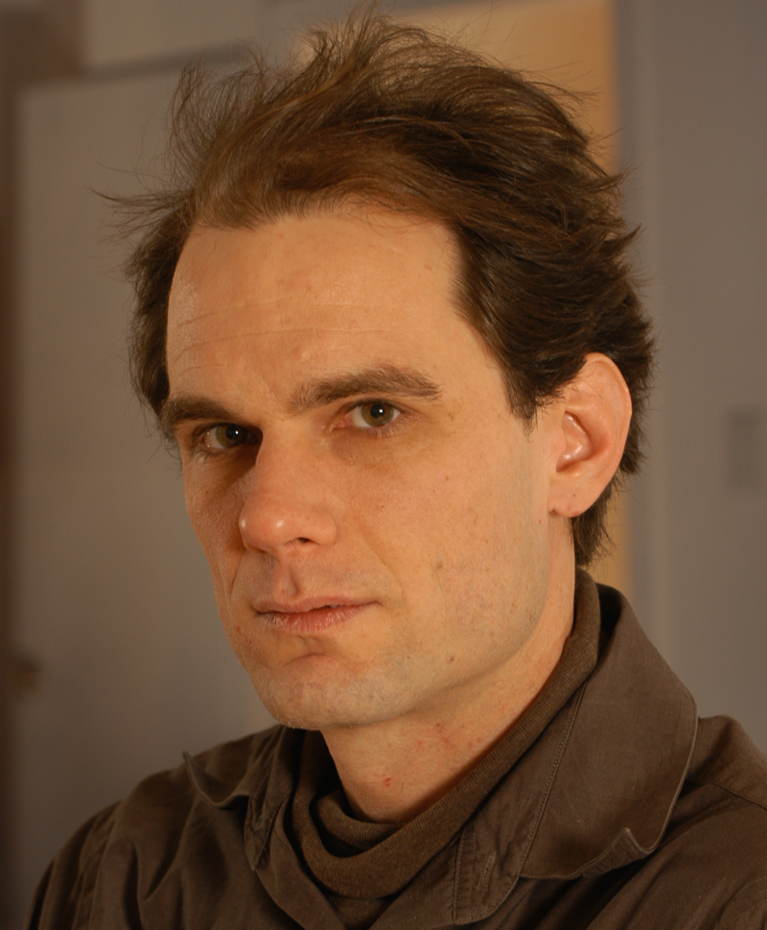
Reynold Reynolds (born 1966) is an American visual artist who currently lives and works in Amsterdam. He is a recipient of a fellowship from the John Simon Guggenheim Memorial Foundation. He has been awarded both the Rome Prize (2013) and the Berlin Prize (2004). His works are in the permanent collection of the Museum of Modern Art (New York) and have been shown at numerous biennials, including the 4th Berlin Biennale and the 3rd Moscow Biennale. His short film The Drowning Room received an honourable mention at the Sundance Film Festival.
While pursuing his bachelor’s degree at the University of Colorado in Boulder, Reynolds studied physics and graduated under the tutelage of Carl Wieman (2001 Nobel Prize winner in physics). After shifting his focus to fine arts, he remained in Boulder for two more years to study with experimental filmmaker Stan Brakhage. After moving to New York City, Reynolds completed his Master of Fine Arts at the School of Visual Arts.
Influenced by philosophy and science and working primarily with 16mm film as an artistic medium, he developed his own unique film grammar. By subtly altering familiar conditions and observing their effects, he transfers experimental scientific methods to filmmaking in order to reveal underlying causality. He has received numerous awards for his work, including the Festival Prize for Secret Life at the European Media Art Festival Osnabrück 2008, the Distinction Award for Six Apartments at Transmediale Berlin 2009 and the Festival Prize for 1 Part 7 at Videoformes 2015.
http://artstudioreynolds.com/
___
> The presentation at ZFICTION.26 | FIRE, WATER AND THE ORDINARY DISDAIN
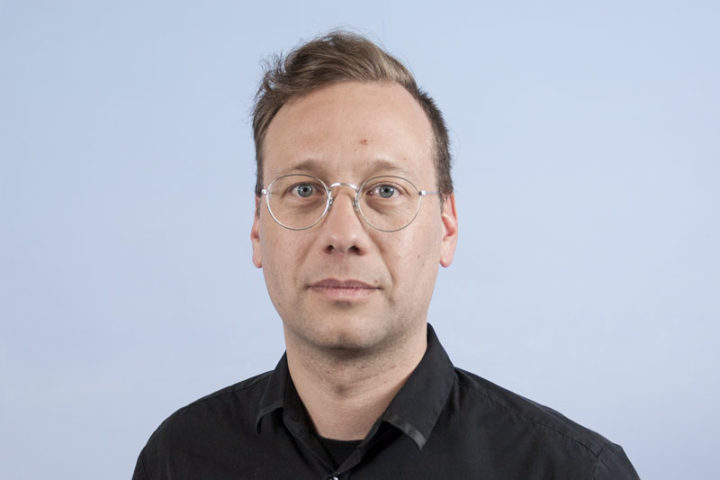
Thomas Kissling (*1980) studied architecture at ETH Zurich after his apprenticeship as an interior designer and worked as a research assistant and senior assistant at Günther Vogt’s professorship at ETH Zurich between 2010 and 2021. He taught future architects at FH Potsdam (2020/2021) and ETH Zurich (2022/2023) and is the editor of the publications “Landscape as a Cabinet of Curiosities”, “Mutation and Morphosis” and “Solid-Fluid-Biotic” (all Lars Müller Publishers, Zurich). He has worked for VOGT Landscape Architects since 2021 and heads the four offices in Zurich, London, Berlin and Paris as overall office manager.
___
> The presentation at ZFICTION.26 | LANDSCAPE AS MUNDANE NARRATION & THE MEDIEVAL CHAMBER OF WONDERS
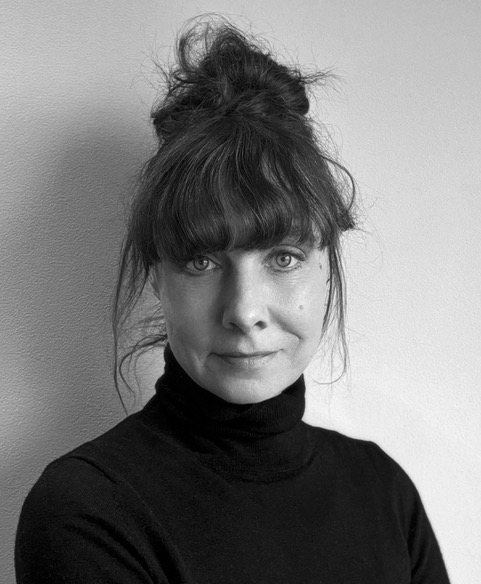
Birgit Glombitza is a freelance dramaturg, lecturer, and curator with a focus on film art, experimental formats, and cinematic dramaturgy. Since 2020, she has been teaching at the Zurich University of the Arts (ZHdK) in the Institute of Film and has previously held teaching positions at the University of Basel, HfBK Hamburg, and HafenCity University. From 2010 to 2018, she served as the artistic director of the International Short Film Festival Hamburg, curating numerous film programs and special projects at the intersection of cinema, art, and installation. As a dramaturg, she has supported international feature, documentary, and experimental films, including productions showcased at festivals such as Locarno and Rotterdam. She has also served on juries for various national and regional film funding institutions. In addition, she regularly publishes essays and texts on film, the body, space, and aesthetics in academic publications, catalogues, and media outlets.
___
> The presentation at ZFICTION.26 | The Weight of Walls and the Void of Rooms: Staging Memory Loss in Vortex and The Father
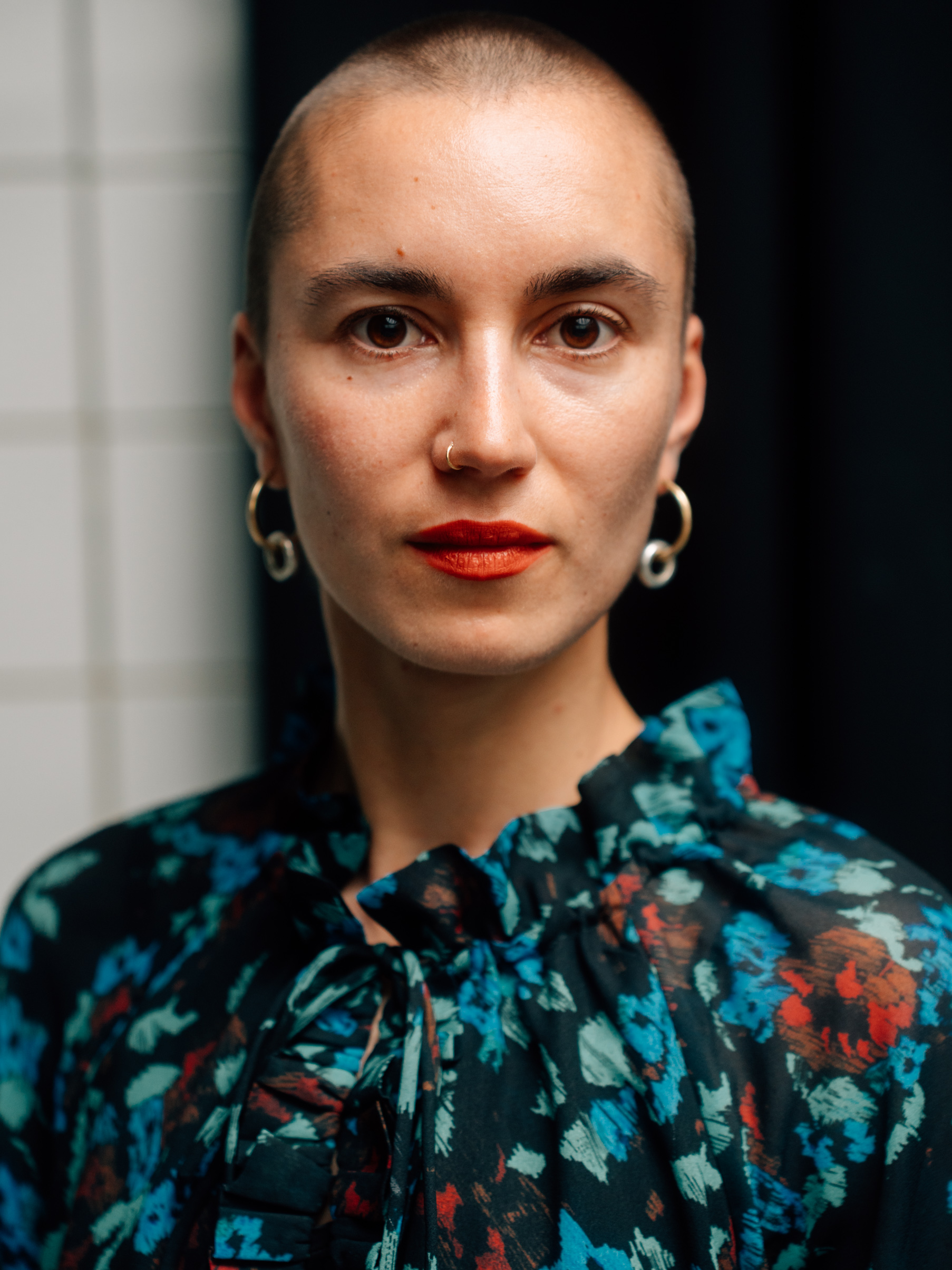
Gina Dellagiacoma is a researcher and cultural producer based in Lucerne and Zurich.
Since 2023, Gina Dellagiacoma is a PhD candidate at the Department of Social Anthropology and Cultural Studies at the University of Zürich and research assistant to Prof. Dr. Silvy Chakkalakal. Prior to this, she completed her master’s degree in Cultural Studies at the University of Lucerne and worked at the Interdisciplinary Centre for Gender Studies at the University of Bern. Her current research and teaching focuses on arts and aesthetic practices, feminist and queer theories and visual culture studies. She is a board member of Empirical Cultural Studies Switzerland (EKWS).
Her dissertation is on feminist films during the new women’s movement in Switzerland (1970–95). In her project, she’s investigating not only the historical phenomenon of feminist film, but also the actualisation of practices and protagonists in the present. Her dissertation is part of the doctoral programme ‘Epistemologies of Aesthetic Practices’ at the Collegium Helveticum.
In her broader work, Gina Dellagiacoma is interested in the creation and mediation of knowledge at the intersections between art and academia. For many years, she has worked in and together with various cultural institutions such as Neubad Luzern, Die Predigt, Kleintheater Luzern or aha – ein Festival für Wissen, where she has curated and moderated a variety of lectures and discussions.
For a more detailed CV please see: https://www.isek.uzh.ch/en/culturestudies/aboutus/team/mid-level/dellagiacoma.html
___
> The presentation at ZFICTION.26 | Feminism at the Kitchen Table
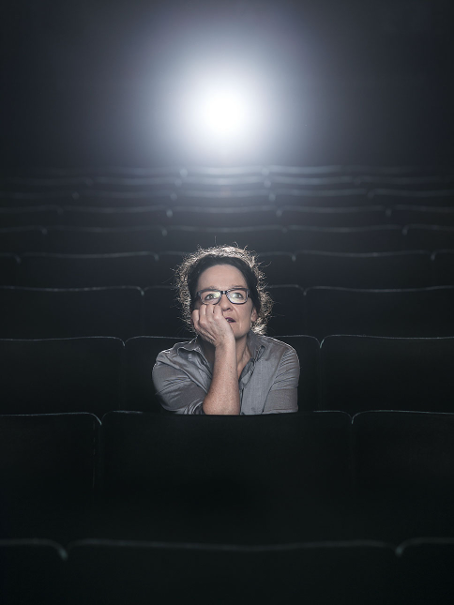
Ute Holl teaches at the Department of Media Studies in Basel and conducts research on the history of knowledge and perception in audiovisual media, particularly the aesthetics of cinema, as well as acoustic and electroacoustic media, archives and archiving strategies, and questions of subjectification and agency under conditions of AI.
Recent publications include: Radiophonic Cultures. (ed.) Heidelberg, vols. 1&2, 2018/2024; “Calculating with Images. Data/Networks/Behaviour,‘ in F. Liptay (ed.) Taking Measures, Zurich, 2024, ’Glitch and the Ecologies of Sound Worlds,‘ in Glitch – The Art of Disruption, catalogue of the Pinakothek der Moderne, Munich 2023; ’Models of the Psyche, Technical Media and the Problem of Intelligence,” in: Julia Weber and Bernd Bösel (eds.) The Power of Psychotechnics, Frankfurt/New York, Campus Verlag 2025.
Together with Peter Ott, she made the films Traum, Wolken, Off, Exil (2017) and Die Amitié (D 2023).
___
> The presentation at ZFICTION.26 | The Weight of Walls and the Void of Rooms: Staging Memory Loss in Vortex and The Father

Fabienne Liptay is a professor of film studies at the University of Zurich. Currently, she is directing the research project Exhibiting Film: Challenges of Format (2017–2026), which was awarded an excellence grant by the Swiss National Science Foundation. She is also a founding member of the Centre for Arts and Cultural Theory (UZH/ZHdK) and a co-editor of the academic book series “Think Art” (Diaphanes). Together with Dorota Sajewska, she founded the Institute for Performance and Film Expanded, an experimental research laboratory that brings together researchers, artists and curators for non-disciplinary explorations of performance and film.
She has published widely on the theory and aesthetics of the moving image, film exhibition and cinema expanded, being particularly interested in the relation between film, literature, visual arts and performance. Her publications include the monograph Telling Images: Studien zur Bildlichkeit des Films (Diaphanes, 2016), as well as the co-edited books Taking Measures: Usages of Formats in Film and Video Art (Scheidegger & Spiess, 2023, in collaboration with the Migros Museum für Gegenwartskunst), and Eco-operations (Diaphanes, 2024, in collaboration with the documenta Institut).
___
> The presentation at ZFICTION.26 | The Ordinary and the Mundane – A Sketch
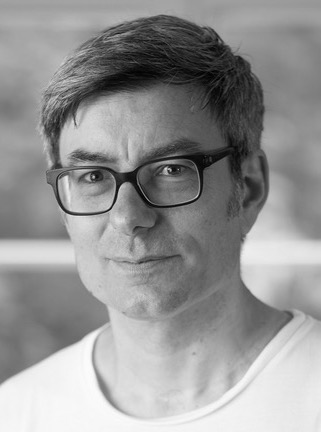
Volker Pantenburg is professor for Film Studies at the University of Zurich, where he directs the SNSF project «Paranational Cinema. Legacies and Practices» (2024 to 2027). He has published on essayistic film and video practices, experimental cinema, and contemporary moving image installations. His latest book is Einfachheit ohne Vereinfachung. Zur Praxis Harun Farockis (2024). Book publications in English include Bernard Eisenschitz: Starting Places. A Conversation with Robert Kramer (2024, Editor) Farocki/Godard. Film as Theory (2015), Cinematographic Objects. Things and Operations (2015, Editor) and Screen Dynamics. Mapping the Borders of Cinema (Co-Editor). In 2015, he co-founded the Harun Farocki Institut.
___
> The presentation at ZFICTION.26 | TO USE IS TO MISUSE: Ozu Yasujiro’s domestic environments
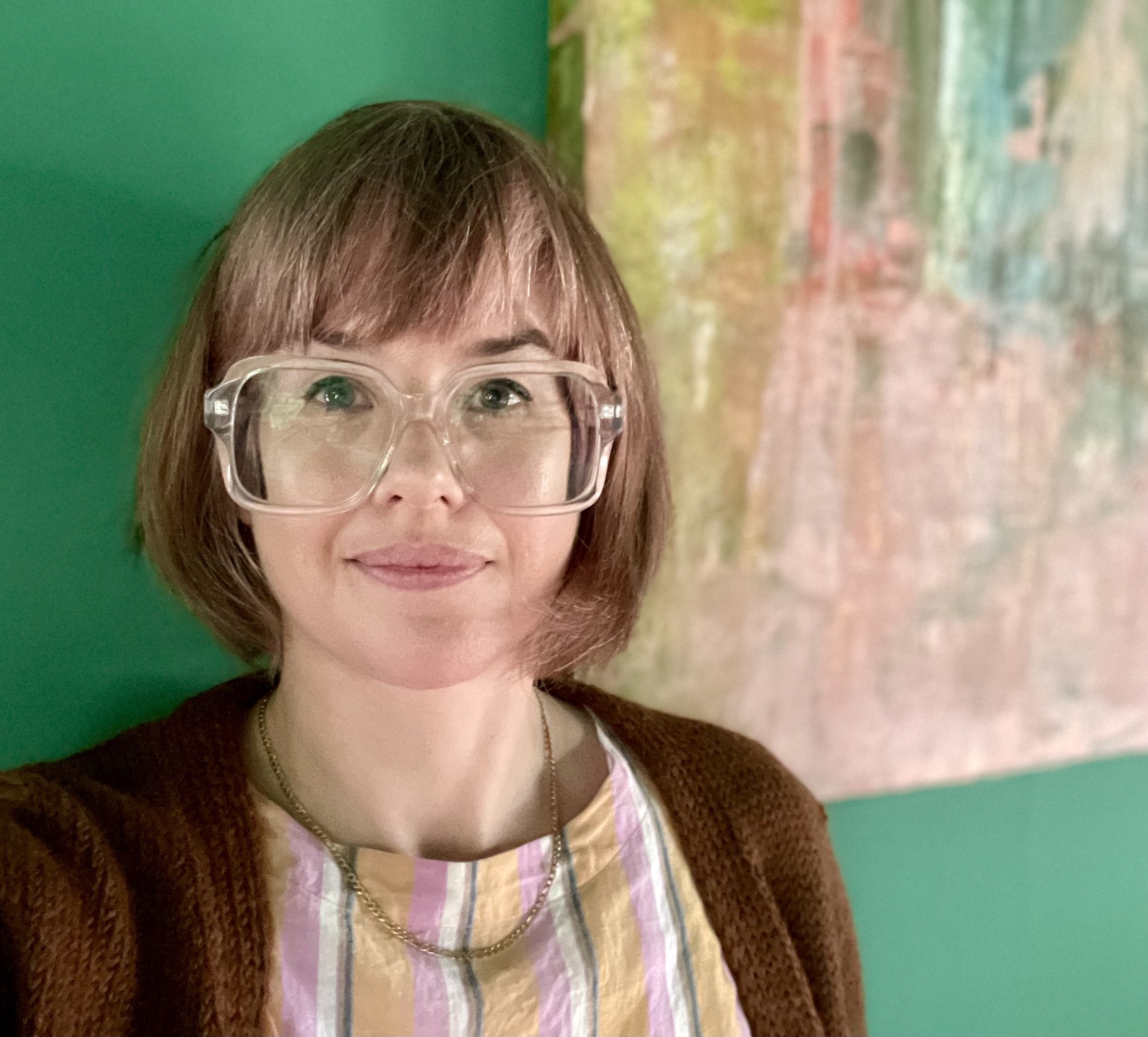
Lucy Fife Donaldson is a Professor of Film Studies at the University of St Andrews. Lucy’s research focuses on film and television style, audiovisual design and ‘below-the-line’ labour, performance and the body, and videographic criticism. She is the author or co-editor of six books, including her monograph, Texture in Film for Palgrave Macmillan’s series: Palgrave Close Readings in Film & Television (Series Editors: Gibbs, John & Douglas Pye), Television Performance (Red Globe Press, 2019) (co-edited with James Walters), and most recently, Epic / everyday: Moments in television (Manchester University Press, 2023) (co-edited with Sarah Cardwell & Jonathan Bignell). Lucy’s award-winning videographic work has been shown at international festivals and featured on the Sight & Sound best video essay lists of 2023, 2024 & 2025.
Her current project is a videographic book on the contribution of film designers to the affective impact of film, foregrounding the personnel whose work is crucial in shaping our emotional and visceral responses to the world onscreen. Through this project she is interested in Using the affordances of the audiovisual to explore the sonic, tactile, material, and embodied dimensions of film design through the medium itself, the project’s form calls attention to design, affect, gesture and embodiment, and invents new aesthetic and conceptual strategies to connect archival, interview and cinematic materials.
She is part of a videographic collaborative project, ‘Ways of Doing’ which fosters an ethical praxis of audiovisual research, with Colleen Laird (University of British Columbia), Dayna McLeod (Performance and media artist scholar) and Alison Peirse (University of Leeds). She is the PI of an AHRC-funded project: Ways of Undoing: Craft, Collaboration and Videographic Practice (2026-28).
Publikationen:
___
> The presentation at ZFICTION.26 | Designing a Frame for Feelings