Autor: sburla

Form before words: Cinematic Story development with Video Sketching

A presentation by RASMUS KLOSTER BRO

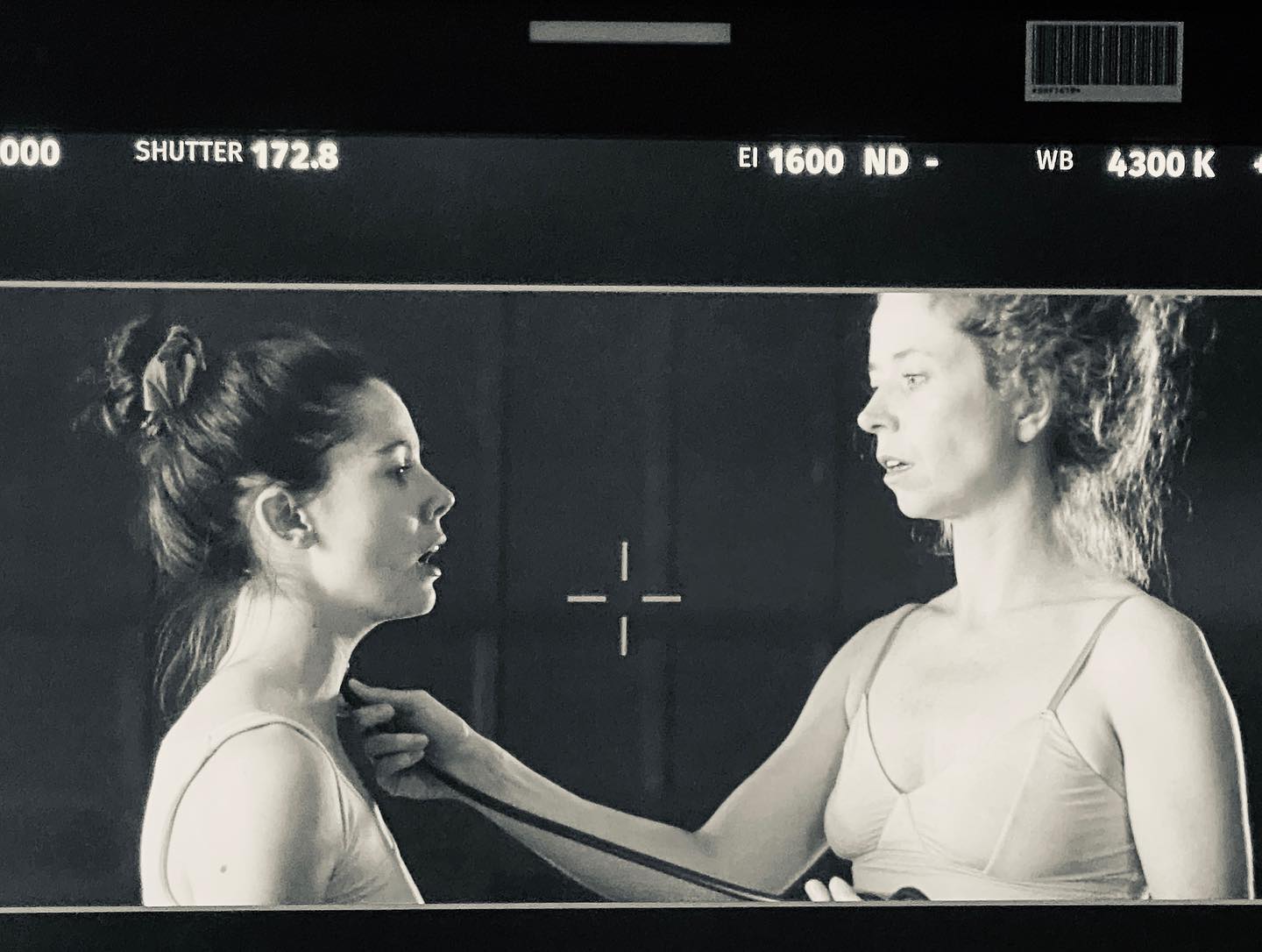
Purely cinematic qualities are difficult or impossible to write and talk about. How do you work, if your stories are based on them? Rasmus Kloster Bro explores working with video sketching as a foundational tool, to offer a platform for developing, qualifying and discussing the cinema-specific artistic sensibilities of a project, without subordinating them to the narrative qualities of the story. The approach seeks to enhance collaboration around cinematic language and bring the cinematic form to a level of importance at least on par with the written narrative, in the initial development. Rasmus presents his findings from the project „Materials of the Cinematic Language“, as a basis for discussion on „Form before Words“.

>Dienstag, 29. Juni, 15:45 – 17:00h  > Programm


Norbert Kottmann

Norbert Kottmann ist Wissenschaftlicher Mitarbeiter im Bereich Postproduktion und Virtual Production der Zürcher Hochschule der Künste. Am Immersive Arts Space entwickelt er die Previsualisierungssoftware «cineDESK».

Er studierte Master in Informatik an der Universität Bern sowie Bachelor Film an der Zürcher Hochschule der Künste und arbeitete als Software Entwickler und Film Editor. Sein Film «Digital Immigrants» gewann den Preis für den besten Schweizer Abschlussfilm.

> ZFICTION.21 Talk:
Virtually Real: Drehen in virtuellen Räumen, präsentiert gemeinsam mit Miriam Loertscher

Exploring the creative possibilities of realtime technologies

Abstract by Andreas Dahn and Mirko Lempert

How can realtime technology be used as a creative tool in the storytelling process, but still address the technical, organizational needs and preconditions of film productions? Can technology that is embracing rapid prototyping, empower artistic talents to exploit their full potential at an early production stage, and help to solve problems with creativity, especially when dealing with limited resources? How can simulation help to test, visualize and negotiate ideas that may serve as foundation for the entire artistic process? Is it possible to create a work environment that is mobile and accessible to everyone regardless of the scale of the budget?

In this presentation Andreas Dahn will give insights on the virtual production process of his short film and vr experience „Home in the Distance“, which he produced as Filmmaker in Residence at the Immersive Arts Space. Mirko Lempert will discuss questions of producing and prototyping in virtual space. Both will share their findings and outcomes from their works at the ZHdK and cast a glimpse into the future of virtual production.

> Dienstag, 29. Juni, 13:45 – 14:30h  > Programm

Virtual Production: grass-roots, green shoots and global flows

ABSTRACT BY Sarah Atkinson

The global pandemic has accelerated the rapid adoption of virtual production. From 3D virtual environments to huge physical volumetric sets – the tools of virtual production are now being widely adopted across the film industry – from independent productions to big budget shoots. With its early roots in machinima, virtual production – filmmaking that is powered by Real Time Game Engines – is irrevocably changing the way that filmmakers work, collaborate and create. This talk considers its rapid development and what these significant shifts could mean for filmmaking practice, global work, and for the environment.

> Dienstag, 29. Juni, 10:00 – 10:45h  > Programm


Low Tech and Lo-Fi: Resisting a Discourse of Mastery

Abstract BY Sylke René Meyer

Advancements in technology are often perceived as drivers for social progress. At the same time, technology frequently enables a minority to wield power over non-Western, non-white, and non-heteronormative masculine communities that have only limited access to advanced technologies. What Lyotard terms the phallocracy of high tech actually disenfranchises most of the world’s population while putting forth an ideology of superiority. Under the pretense of data neutrality, superior intelligence, and high-tech mastery, this ideology prevents ‘other’ voices from being heard.

In this course, I suggest a user-centric approach towards prototyping as artistic practice. Without dismissing high-tech’s power, we will think about prototyping as a process towards final implementation. The narrative forms produced in a low-fi environment shall be perceived as temporal perfections. Low-fi is participatory, fast, and allows for unalienated creation. It is participatory by avoiding the intimidation of high tech and expert cultures, as well as the economic restriction of access to expensive technology. It is fast by allowing for rapid creative response to social contradictions of the moment. It is unalienated because it enables the creator(s) to understand and perform each step of the production process. Free from isolating divisions of labor and the fragmentation of the creative process in hierarchical production, low tech/low-fi cultures offer a practice of collaborative and participatory processes.

> Dienstag, 29. Juni, 14:30 – 15:15h  > Programm
Sarah Atkinson


Sarah Atkinson begann 2015 als Dozentin in Digital Cultures am King’s College London, wo sie in den Departmenten “Digital Humanities” und “Culture, Media & Creative Industries (CMCI)” tätig war. 2017 wurde sie zur Leiterin des Departments CMCI ernannt.

Vorher war Sarah Atkinson Dozentin im Bereich Film & Medien der University of Brighton (2006-2015) und stellvertretende Leiterin der School of Art, Design and Media (2012-2015). Zuvor hatte sie Positionen an der University of Central Lancashire und der University of Salford inne.

Sarah hat einen BA Honours, First Class in Media with Cultural Studies (1998) und einen praxisbasierten PhDin Interactive Cinema (2009). Ausserdem ist Sarah Mitherausgeberin von Convergence: The International Journal of Research into New Media Technologies.

Sie forscht und lehrt unter anderem im Bereich „Expanded Cinema“, „Live Cinema Economy“ und VR. Sie ist Co-Herausgeberin von „Convergence: The International Journal of Research into New Media Technologies“ und Co-Autorin des „Future of Film Reports“.

> ZFICTION.21 Talk:
Virtual Production: grass-roots, green shoots and global flows

> English version