Kategorie: Talks

Political Narrative in Populist Times

Abstract by Christian Schwochow

The tone in politics, but also in society, has become louder in recent years. Those who want to get through with their opinions: polarize, simplify and coarsen. This changes politics and this also changes the view on politics. How do we as artists, as filmmakers, react to the intensifying populism in Europe and the world? How can we use our means to confront the anti-democratic forces that reject our understanding of society and try to divide it without becoming didactic or lecturing?

In recent years, Christian Schwochow has attempted to narrate political television and cinema with various works such as: „NSU-Heute ist nicht alle Tage“, „Deutschstunde“, „Je suis Karl“ and „Munich -The Edge of War“. At the conference, Christian Schwochow will report on his various approaches. It will be about why it is becoming more and more important to tell shades, what limits political storytelling brings with it and why he nevertheless considers it extremely important as an artist to confront political issues. Also in films.

> Deutsche Version

Europäisches Storytelling: Episch, offen, vielfältig


Abstract von Christine Lang

In aktuellen Drehbuchratgebern werden vor allem 3-Akt-Strukturen und damit Modelle einer geschlossenen Dramaturgie diskutiert. Dabei stehen immer eine Hauptfigur und ihre Handlungen im Mittelpunkt. Das europäische Kino zeichnet sich jedoch durch andere, weitaus vielfältigere dramaturgische Traditionen aus. Hier findet man epische, analytische, offene und experimentelle Formen. In diesen spielen ästhetische Mittel wie metaphorische Bilder, die symbolische Aktivierung dramatischer Situationen, dialektische Kontrastierungen und Variationen eine Rolle. Im Vergleich zu einer geschlossenen Dramaturgie verlangt diese Art des Erzählens eine aktivere Rezeption und lädt den Zuschauer zur Interpretation ein. Doch nur auf den ersten Blick wirken diese Filme unregelmäßiger oder gar unfertiger als Werke der geschlossenen Form; im Hintergrund wirken die Gesetze des dramatischen Erzählens, so dass ihre ästhetische Offenheit erst durch Teile der geschlossenen Form ermöglicht wird. Dabei werden jedoch traditionelle dramaturgische Verfahren variiert, gebrochen, fragmentiert und rekombiniert.

In diesem Vortrag werden dramaturgische Verfahren und ihre moderne Adaption anhand verschiedener Filmbeispiele des zeitgenössischen europäischen Kinos vorgestellt und nachvollziehbar gemacht: Asghar Farhadi verbindet in Le Passé (F/I 2013) das klassische Familiendrama mit einer analytischen Dramaturgie; Michael Haneke verlagert in dem epischen Drama Happy End (F/D/AU 2017) die eigentliche Narration ins Implizite, wodurch ein zentrales Thema exemplifiziert wird; Julia Ducournau verbindet in Titane (F 2021) verschiedene Genres auf postmoderne Weise. Diese Filme zeigen, wie facettenreich und vielfältig moderne Dramaturgie sein kann.

link zum PDF

> English Version

European Storytelling: Epic, open, diverse

Abstract by Christine Lang

In current screenplay guides, mainly 3-act structures and thus models of closed dramaturgy are discussed. Here, the focus is always on a main character and its actions. European cinema, however, is characterised by other, far more diverse dramaturgical traditions. Here one finds epic, analytical, open and experimental forms. In these, aesthetic means such as metaphorical imagery, the symbolic activation of dramatic situations, dialectical contrasting and variations play a role. Compared to a closed dramaturgy, this kind of storytelling requires a more active reception and invites viewers to interpret. But only at first sight do these movies seem more irregular or even unfinished than works of closed form; in the background, the laws of dramatic narration are at work, which means that their aesthetic openness is only made possible by parts of closed form. In the process, however, traditional dramaturgical procedures are varied, broken, fragmented and recombined. In this lecture, dramaturgical procedures and their modern adaptation will be presented and made comprehensible on the basis of various film examples of contemporary European cinema: In Le Passé (F/I 2013), Asghar Farhadi combines the classic family drama with analytical dramaturgy; in the epic drama Happy End, (F/D/AU 2017), Michael Haneke shifts the actual narration into the implicit through which a central theme is exemplified; in Titane (F 2021), Julia Ducournau combines different genres in a postmodern way. These films show how multifaceted and diverse modern dramaturgy can be.

> Deutsche Version

The Narrative Brain

Abstract by Fritz Breithaupt

Why do we love stories? Life is experienced more intensely when we are enmeshed in stories – I narrate, therefore I am. But it is not only our own lives that are heightened by narratives; through narratives we are also able to transform individual experience into shared experience. To achieve this, our brains and the ways in which we tell stories must be attuned to each other. But how exactly does this happen? And what makes a story a good story?

In this talk, Fritz will draw on the latest scientific research including neuroscience and experiments where thousands of participants play the telephone game (Stille Post Spiele) to discuss the structure of successful narratives that people co-experience. The reward of narrative thinking, it turns out, is emotional, and we live the way we live because we follow the specific reward patterns of narratives. Yet at the same time, things can always turn out differently in narratives, and it is precisely this fact that allows us to try out different versions of our own lives.

> Deutsche Version

Concept of dramaturgy and a dramaturgical case study (Tarkovsky) from a screenwriter’s perspective

Abstract by Marja-Riitta Koivumäki
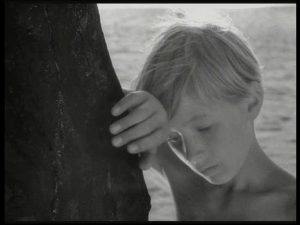
Ivan’s Childhood (1962, Tarkovsky)

A performance or an audio-visual performance (screening) is an essential part of theatre and film art. My concept of dramaturgy is tied around the concept of a performance but what does it mean, when we talk about film. I will start my presentation by discussing the dramaturgical approach in studying film from the practitioner’s point of view.

Through dramaturgical approach, I aim to reveal the systematic function of an immanent structure created by contrast and visual spatial metaphor in Andrey Tarkovsky’s Ivan’s Childhood (1962). My contention is that contrast and spatial metaphor in Tarkovsky’s film organizes the story elements in a way that can be described as “poetic” − something that is inherently typical for visual storytelling. Therefore, contrast not only organizes characters but also other meaningful elements in a story and provides a potentially useful tool not only for the writer, but also other film practitioners. In addition, this paper aims to analyze the nexus between word and image in the screenplay and film in order to understand whether contrast and spatial metaphor have been defined in the screenplay or are they something that the director has introduced into the film.

Das narrative Gehirn

Abstract von Fritz Breithaupt

Warum lieben wir Geschichten? Das Leben wird intensiver erlebt, wenn wir in Geschichten verstrickt sind – ich erzähle, also bin ich. Aber nicht nur unser eigenes Leben wird durch Erzählungen intensiviert; durch Erzählungen sind wir auch in der Lage, individuelle Erfahrungen in gemeinsame Erfahrungen zu verwandeln. Um dies zu erreichen, müssen unser Gehirn und die Art und Weise, wie wir Geschichten erzählen, aufeinander abgestimmt sein. Aber wie genau geschieht das? Und was macht eine Geschichte zu einer guten Geschichte?

In diesem Vortrag stützt sich Fritz auf die neueste wissenschaftliche Forschung, einschließlich der Neurowissenschaften und Experimente, bei denen Tausende von Teilnehmern das Telefonspiel (Stille Post Spiele) spielen, um die Struktur erfolgreicher Erzählungen zu erörtern, die Menschen gemeinsam erleben. Die Belohnung des narrativen Denkens, so stellt sich heraus, ist emotional, und wir leben so, wie wir leben, weil wir den spezifischen Belohnungsmustern der Narrative folgen. Gleichzeitig können die Dinge in Narrativen aber auch immer anders verlaufen, und genau diese Tatsache ermöglicht es uns, verschiedene Versionen unseres eigenen Lebens auszuprobieren.

> English Version

Kathrin Resetarits (EN)

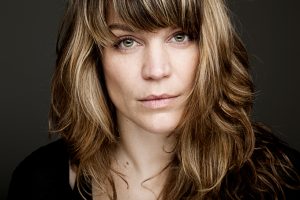
Foto: Isabell Schatz

Kathrin Resetarits works as a writer, dramaturg, director, actress, lives in Vienna. Since 2000 she has been artistic assistant to Michael Haneke, Senior Lecturer at the Vienna Film Academy in the Department of Screenwriting and Dramaturgy and guest lecturer at the German Film and Television Academy (DFFB) Berlin. Kathrin Resetartis gives lectures and workshops on thematically bound or constellative storytelling for filmmakers in Austria and Germany. She is also a founding member of FC GLORIA networking for women in film.

Selection of current works:

Screenplay:
Licht, feature film A/D 2017, director: Barbara Albert.
Weihnachten, ORF television film 2022 (in production), Director: Mirjam Unger, Arman T. Riahi.

Dramaturgy:
Quo vadis, Aida?, feature film 2020, directed and written by Jasmila Žbanić,
Western, feature film D 2017, director and screenplay: Valeska Grisebach

Drama:
L’animale, A 2017, directed by Katharina Mückstein.

Artistic assistance:
Happy End, F/A 2017, director: Michael Haneke

Co-director:
Michael, A 2011, Director: Markus Schleinzer, Cannes Official Competition.

Book:
Vögel sind zu Besuch, Czernin Verlag

> Deutsche Version

Kathrin Resetarits

Foto: Isabell Schatz

Kathrin Resetarits arbeitet als Autorin, Dramaturgin, Regisseurin, Schauspielerin, lebt in Wien. Seit 2000 ist sie künstlerische Assistentin für Michael Haneke, Senior Lecturer an der Filmakademie Wien im Fachbereich Drehbuch und Dramaturgie und Gastdozentin an der Deutschen Film- und Fernsehakademie (DFFB) Berlin. Kathrin Resetartis gibt Vorträge und Workshops zum thematisch gebundenen, bzw. konstellativen Erzählen für Filmemacher*innen in Österreich und Deutschland. Sie ist ausserdem Gründungsmitglied von FC GLORIA Frauen Vernetzung Film.

Auswahl aktueller Arbeiten: 

Drehbuch:
Licht, Kinofilm A/D 2017, Regie: Barbara Albert
Weihnachten, ORF Fernsehfilm 2022 (in Produktion), Regie: Mirjam Unger, Arman T. Riahi

Dramaturgie:  
Quo vadis, Aida?, Kinofilm 2020, Regie und Drehbuch: Jasmila Žbanić,
Western, Kinofilm D 2017, Regie und Drehbuch: Valeska Grisebach

Schauspiel:
L’animale, A 2017, Regie Katharina Mückstein

Künstlerische Assistenz:
Happy End, F/A 2017, Regie: Michael Haneke

Co Regie:
Michael, A 2011, Regie: Markus Schleinzer, Offizieller Wettbewerb Cannes

Buch:
Vögel sind zu Besuch, Czernin Verlag

> English Version

Jan Bennemann

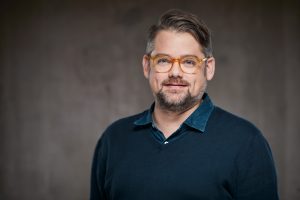
Fotocredit: ©Netflix

Manager, Local Language Series DACH Netflix

Jan Bennemann arbeitet seit April 2021 bei Netflix als Manager, Local Language Series, Germany. Der langjährige TV-Manager verfügt über 20 Jahre Erfahrung in der Entwicklung, Finanzierung, Produktion und Akquisition von seriellen TV-Dramen für den deutschsprachigen und internationalen Markt. Aktuell realisiert Bennemann mit seinem Team die zweite Staffel der deutschsprachigen Erfolgsserie Barbarensowie  Anna Winger’s Transatlantic (AT).

Zuletzt beaufsichtigte Jan Bennemann als SVP Co-Production & Acquisition bei Dynamic Television Koproduktionen und Akquisitionen in Europa sowie die Entwicklung von Originalinhalten und den Aufbau einer eigenen Produktionseinheit mit Schwerpunkt auf Deutschland und den nordischen Ländern. Davor baute er das Berliner Büro des Unternehmens auf und initiierte dort Koproduktionen mit europäischen Produzenten, Talenten und Sendern. Darunter etwa die Produktionen Soil (OT: Grond), Tod von Freunden, The Summerdahl Murders oder Deliver Us (OT: Fred til lands).

Jan Bennemann (EN)

Fotocredit: ©Netflix
Manager, Local Language Series, Germany at Netflix

Jan Bennemann joined Netflix in April 2021 as Manager, Local Language Series, Germany. The seasoned TV executive has 20 years of experience in the development, financing, production and acquisition of serialized TV drama for the German-speaking and the international market. With his team, Bennemann is currently realizing the second season of the successful German-language series Barbarians as well as Anna Winger’s Transatlantic (WT).

Most recently, as SVP Co-Production & Acquisition at Dynamic Television, Jan Bennemann oversaw co-productions and acquisitions in Europe, as well as the development of original content and the building of an in-house production unit focused on Germany and the Nordic countries. Prior to that, he established the company’s Berlin office, where he initiated co-productions with European producers, talent and broadcasters. These included the productions Soil, Beneath the Surface, The Summerdahl Murders and Deliver Us.

Lars Wiebe (EN)

Fotocredit: ©Netflix

Manager, Film EMEA at Netflix

Lars Wiebe joined Netflix in July 2021 as Manager, Film EMEA for the markets Germany, Austria and Switzerland. With the film productions Blood Red Sky ( author & director: Peter Thorwarth) and München – Im Angesicht des Krieges (director: Christian Schwochow), Wiebe and his team have already landed two international successes on Netflix. Wiebe is currently working on the film adaptation of the anti-war film Im Westen nichts Neues, directed by Edward Berger, and is developing Peter Thorwarth’s second project, Blood and Gold.

Most recently, Lars Wiebe was Head of German Productions at SquareOne Entertainment, where he realized the German-British co-production The Keeper by Marcus H. Rosenmüller and Hinterland by Stefan Ruzowitzky, among others. Before that, he was Head of Acquisitions and Co-Productions at the Swiss film production and financing company Millbrook Pictures, based in Zurich. Lars Wiebe is a graduate of the University of Film and Television Munich.