Category: Talks

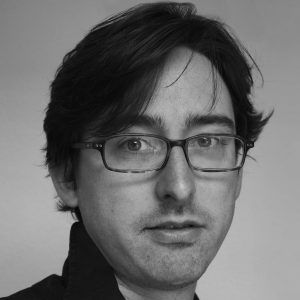
Sylke René Meyer (EN)

Sylke René Meyer is a Professor, and Associate Director of the MFA program in Creative Writing and Literary Arts at California State University in Los Angeles. She is also the Director of the Institute for Interactive Arts, Research and Technology.
In addition to her work as a media theorist, she is a writer, director, performance artist, and co-founder of the performance group Studio 206 in Berlin (2007), expanded in LA (2019), and the performance group Family Room Collective in Los Angeles, 2018.
Her practice is informed by and engages with film and media history, theory, and criticism, and encompasses feature and documentary filmmaking, as well as writing and collaborative experimentation across theater, new media and digital platforms.

Her work has garnered numerous awards such as an Emmy Award, and Best Film Awards at major festivals such as Seattle, Chicago, and Montreal. Sylke René Meyer is the editor of the recently published collection “Interactive Storytelling for the Screen”.

> ZFICTION.21 Talk: Low Tech and Lo-Fi: Resisting a Discourse of Mastery

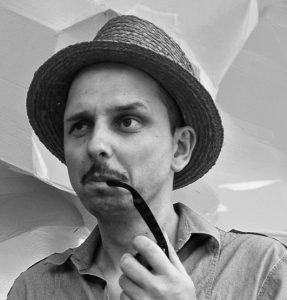
Sarah Atkinson (EN)

Sarah joined King’s College London in 2015 as Senior Lecturer in Digital Cultures working across the Department of Digital Humanities and the Department Culture, Media & Creative Industries (CMCI). She was appointed Head of CMCI from 2017-2020.
Sarah was Principal Lecturer in Film & Media (2006-2015) and Assistant Head of School of Art, Design and Media (2012-2015) at the University of Brighton, having held previous positions at the University of Central Lancashire and the University of Salford.
Sarah has a BA Honours, First Class in Media with Cultural Studies (1998) and a practice-based PhD in Interactive Cinema (2009).
Her research and teaching includes Expanded Cinema, Live Cinema Economy, and VR. She is co-editor of Convergence: The International Journal of Research into New Media Technologies and co-author of the Future of Film Report.

> ZFICTION.21 Talk: Virtual Production: grass-roots, green shoots and global flows

> Deutsche Version


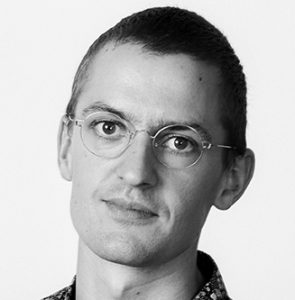
Andreas Dahn (EN)

In 2000, Andreas Dahn entered the film business through internships in modeling and visual effects (VFX). After four years of work experience as a VFX artist, he was admitted to study directing at the Filmakademie Baden-Württemberg in 2005 with the award-winning short film The Maid from Hilltop Manor. Alongside his studies, he continued to work as a VFX artist in Germany and India. His graduation film E.T.A. Hoffmann’s Der Sandmann won awards in Milano and Hungary, was broadcast on German television and is on sale on DVD. After graduation, Andreas created effects for Game of Thrones, Grand Budapest Hotel and several Marvel films. He received grants from UCLA, EFA and in 2019 from the Ernst Göhner Foundation, which allowed him to realize the short film Haus in der Ferne (House in the Distance) at the Immersive Arts Space, ZHdK. For this he combined new technologies such as photogrammetry and virtual reality with the motion capture process.


> ZFICTION.21 Talk: Exploring the creative possibilities of realtime technologies – joint presentation with Mirko Lempert


> ZFICTION.21 Exhibition: Home in the Distance VR – Camera work in virtual space


Mirko Lempert (D)

Mirko Lempert hat einen MA in Filmproduktion und ist Assistenzprofessor für visuelle Medien an der Stockholmer Universität der Künste. Mirkos Arbeit konzentriert sich vor allem auf Kommunikationsstrategien in komplexen Produktionsprozessen und Prävisualisierung in VR. Er ist Mitbegründer der Stockholmer Firma Monocular.

> ZFICTION.21 Talk:
Drehen in Echtzeit mit Virtual Reality – gemeinsam mit Andreas Dahn

> ZFICTION.21 Ausstellung:
CineDESK

> Link:
Collaborative Filmmaking in Virtual Reality

> English Version

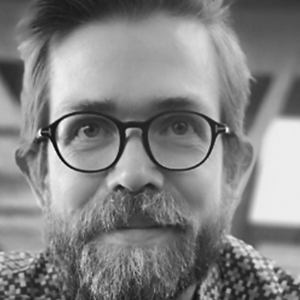
Rasmus Kloster Bro (EN)

Rasmus Kloster Bro is a Danish film director. He researches and teaches at the National Film School of Denmark. His work includes features films, VR projects, commercials and radio dramas. His thriller CUTTERHEAD was centered on acting and the physical experience, which he took as the starting point of the narration and used video sketching previsualization methods to achieve funding for the film. His research work “Materials of the Cinematic Language” explores forms of image-based writing through “Video Sketching” and “Theater Devising”.

> ZFICTION.21 Talk: Form before words: Cinematic Story development with Video Sketching

> Link: Interview zu Cutterhead auf cineuropa.org

> Deutsche Version

Simon Jon Andreasen (D)

Simon Jon Andreasen ist Leiter der Animationsregie-Ausbildung der Dänischen Filmschule (im Bereich Animation und Spiele) und der Akademie von Dadiu (The Danish Academy of Digital Interactive Entertainment), sitzt in einer Reihe von Vorständen und Beiräten für z.B. ITU, die Scripwriting-Schule für Kinderliteratur, Multiplatform Storytelling VIA und eine Reihe von kulturellen Institutionen und privaten Unternehmen. Simon ist Autodidakt und hat mehrere Radioshows, Dokumentationen, TV-Serien und Computerspiele für nationale und internationale Medienunternehmen inszeniert. Außerdem war Simon Head of Digital beim Verlag People’s Press und arbeitete mit bei der digitalen Strategie des Verlagshauses Gyldendal.

In den letzten Jahren hat Simon im künstlerischen Forschungsprojekt “Storyworld 2.0” erforscht, wie man mithilfe von Virtual Production transmediale Welten schaffen kann.

> ZFICTION.21 Talk:
Universe Devising with Virtual Production

> English Version

Christian Iseli (EN)

Christian Iseli studied history, German and English at the University of Bern. He then worked as a director of documentary films and worked in the areas of editing and camera on feature films and documentaries. At the ZHdK he leads the newly launched Immersive Arts Space and was responsible for the research focus on film at the Institute for the Performing Arts and Film until 2020.

> ZFICTION.21 Talk:
The Promise: Storytelling meets Virtual Production – joint-presentation together with Michael Schaerer

> Deutsche Version

Miriam Loertscher (EN)

Miriam Loertscher is head of the Film Research Unit at the Institute for the Performing Arts and Film, ZHdK. She studied media-, social- and neuropsychology at the University of Bern and film studies at the University of Zurich. From 2012 to the beginning of 2018, she was Head of Communications for Fantoche, the International Animation Film Festival in Baden/Switzerland. Since 2014 she has been working at the Institute for the Performing Arts and Film with a research focus on film perception, digitization and acting research. In 2019 she received her PhD from the University of Bern on the change of film perception in the course of digitalization.

> ZFICTION.21 Talk: Virtually Real: filming in virtual spaces, joint presentation with Norbert Kottmann

> Deutsche Version


Michael Schaerer (EN)

Michael Schaerer is a film director, editor and professor of film editing at the ZHdK. He works in Switzerland and Germany, in series, feature film and television. He is also the head of the Zurich feature film conference ZFICTION.

> ZFICTION.22 Talk:
Welcome speech
– joint-presentation together with Stefan Jäger

> ZFICTION.21 Talk:
The Promise: Storytelling meets Virtual Production – joint-presentation together with Christian Iseli

> Link:
ZHdK-Website

> Deutsche Version

Form before words: Cinematic Story development with Video Sketching

A presentation by RASMUS KLOSTER BRO

Purely cinematic qualities are difficult or impossible to write and talk about. How do you work, if your stories are based on them? Rasmus Kloster Bro explores working with video sketching as a foundational tool, to offer a platform for developing, qualifying and discussing the cinema-specific artistic sensibilities of a project, without subordinating them to the narrative qualities of the story. The approach seeks to enhance collaboration around cinematic language and bring the cinematic form to a level of importance at least on par with the written narrative, in the initial development. Rasmus presents his findings from the project “Materials of the Cinematic Language”, as a basis for discussion on “Form before Words”.

>Dienstag, 29. Juni, 15:45 – 17:00h  > Programm